Services
Venice, Englewood & Sarasota MRI Services: Advanced Imaging for Rapid Diagnosis
RAVE Radiology offers MRI at three locations: 3T wide-bore MRI at RAVE Venice, 1.5T wide-bore MRI at RAVE Sarasota and 1.5T MRI at RAVE Englewood. MRI gives detailed images of organs, tissues and bones to help diagnose injuries, tumors and neurological disorders. Our comfortable, non-invasive scans, often completed in 30-60 minutes, provide fast answers to critical health questions. Don’t delay your diagnosis-early detection can make all the difference.
Call (941) 488-7781 now to schedule your MRI scan at one of our convenient locations, including our MRI in Sarasota!

MRI Scan
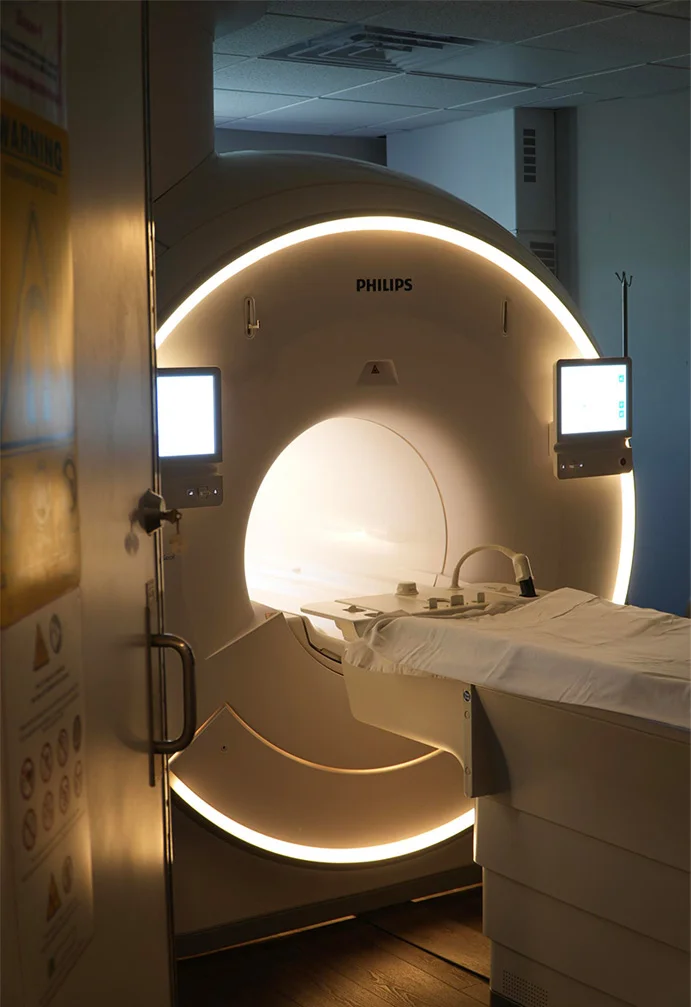
Philips wide bore 3T MRI scan available at our Venice location and “state of the art” Intera 1.5T scanner available at our Englewood location. High field and Wide Bore MRI at our Sarasota Location.
MRI Services Offered:
- Brain
- Orbit, Face or Neck
- Cervical, Lumbar, Thoracic, & Sacrum
- Breast MRI
- Breast Biopsy
- TMJ
- MRA
- Abdomen
- MRCP
- Pelvis
- Prostate
- Joint
What is a MRI Scan?
Magnetic resonance imaging, commonly known as MRI is a medical test that aids physicians in diagnosis and treating medical conditions. This is a noninvasive and typically painless test.
In contrast to the more common X-Ray that uses ionizing radiation, MRI uses a strong magnetic field, radio waves and a computer. This enables MRI to make very detailed pictures of bone, organs, soft tissues and any other body structures. The physician can then view the pictures on the computer for further evaluation.
How is MRI Performed?
MRI test are typically done on an outpatient basis as they generally can be completed under 30 minutes per exam.
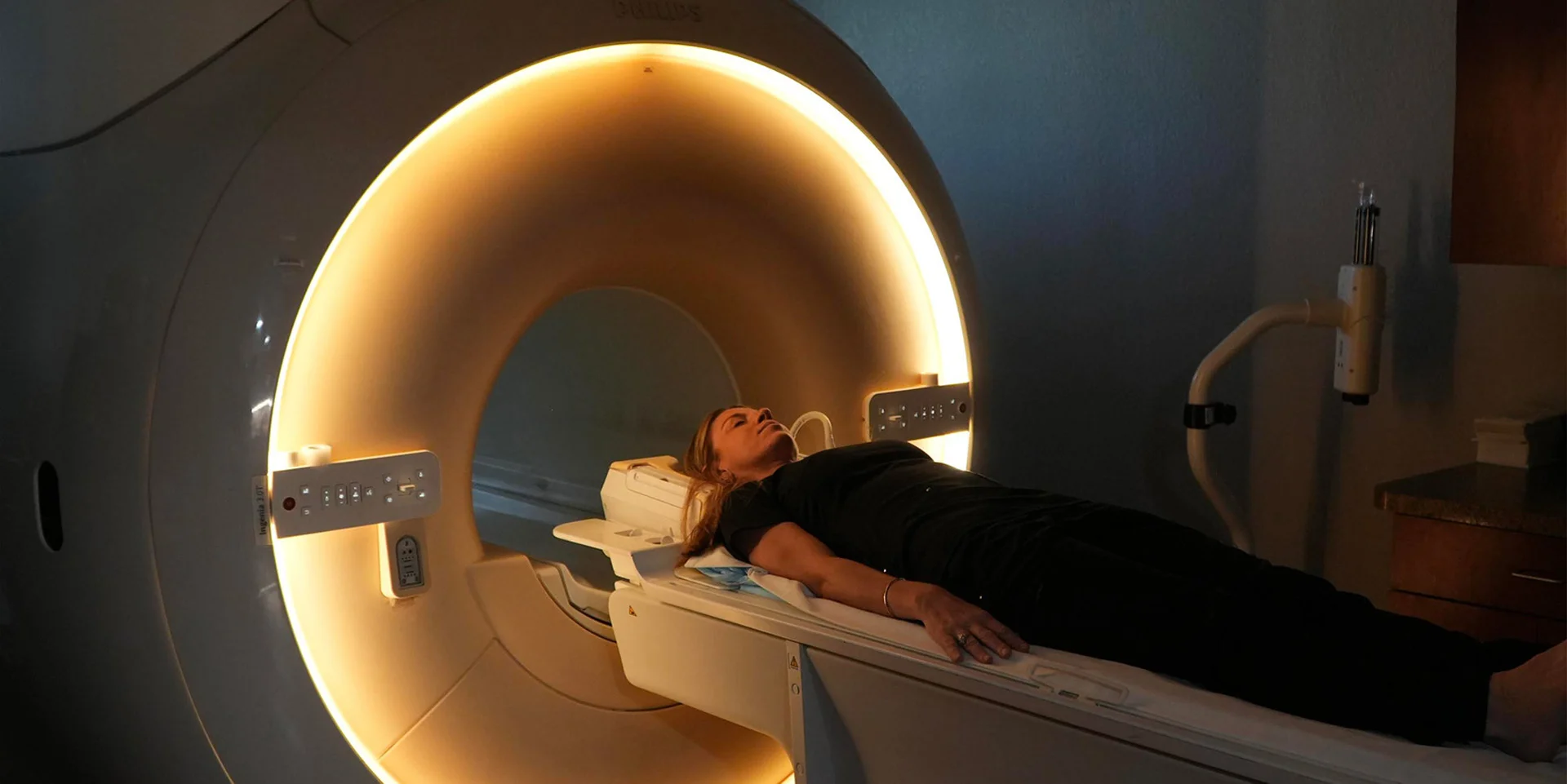
Patients are positioned on a moveable exam table. A coil containing small components that send and receive radio waves may be placed around the portion of the body being examined. If the patients particular procedure requires a contrast dye then the MRI technologists will insert an IV line into a vein in the hand or arm. The exam table will be gently moved into the MRI machine and the technologists will go to an adjacent room where they can perform the tests while watching the patient through a window. The MRI technologists will be able to communicate with the patient through a sound system at anytime. In addition, the patient will have headphones and will be able to listen to the type of music of their choice throughout their procedure or bring their own music CD’s if they choose to do so.
How Should I Prepare for My MRI?
Claustrophobic?
Some of our patients have problems with claustrophobia, usually they know before even having the test. The wide-bore scanners at RAVE Venice (3T) and RAVE Sarasota (1.5T) have a larger opening than a standard MRI. We encourage our patients to come in prior to their appointment to see the MR scanner and ask the technologists any questions or concerns that they may encounter.
If you still feel anxious about the test after speaking to the technologists and/or physician, oral sedation can be discussed prior to your exam. Patients do very well with sedation, however they must have a driver bring them to and from their appointment.
American Cancer Society Recommends Breast MRI
Additionally, women with dense or fibrocystic breast tissue may also benefit from breast MRI. The American Cancer Society recommends that women in these groups still receive a mammogram because the complement of the mammogram and a breast MRI actually provides the highest pickup rate of early breast cancers.